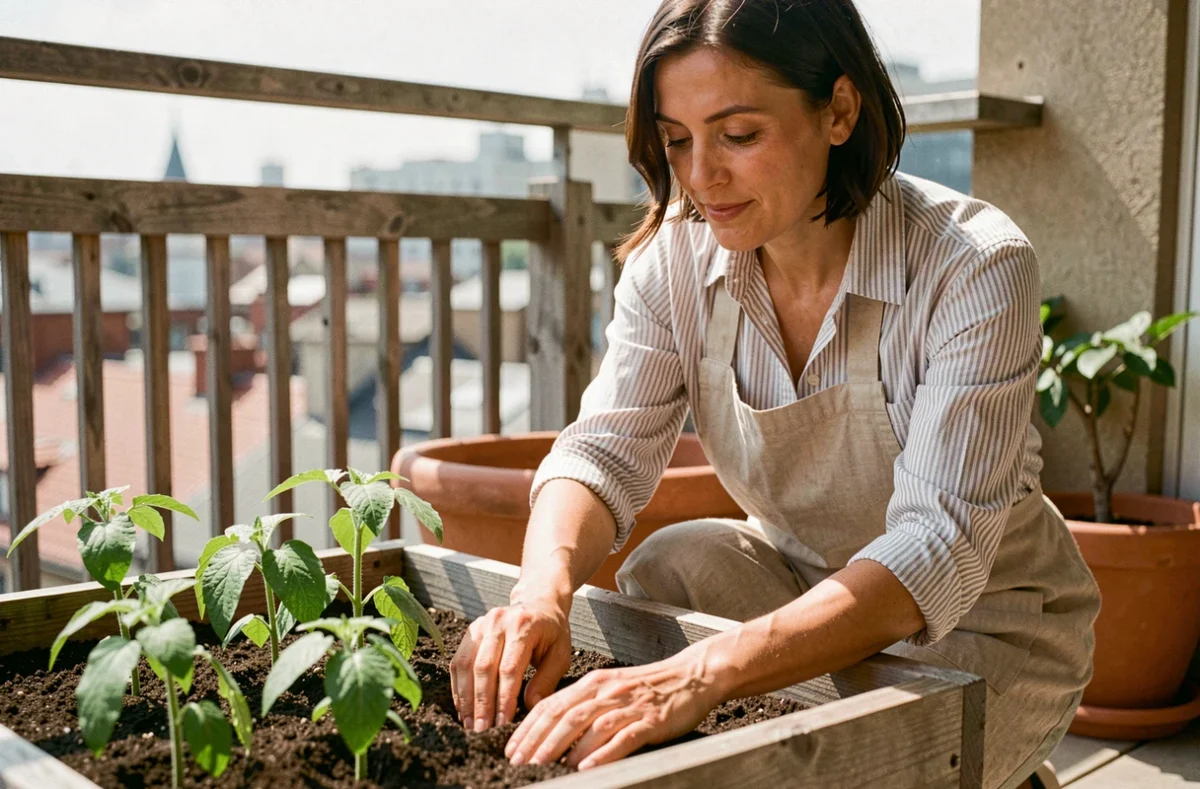
Some tomato plants on a balcony, radishes in a container on the terrace, or a real vegetable patch at the back of the garden: the home vegetable garden takes very different forms depending on the available space. Successfully harvesting your first crops relies less on talent and more on a few technical choices made even before touching the soil.
Living soil and drainage: what your vegetables really expect from the substrate
Before choosing your varieties, take a look at the soil. Take a handful, squeeze it, then open your hand. If the clump stays stuck and shiny, the soil is clayey. If it crumbles immediately, it is sandy. This simple test guides everything else.
Clayey soil retains water but suffocates the roots. Sandy soil drains quickly but does not hold nutrients. In both cases, compost corrects the soil’s deficiencies: it lightens clay and adds body to sand. Spread a few centimeters on the surface each autumn or early spring, without turning the soil deeply. Earthworms will take care of incorporating it.
If you are growing in containers or raised beds, mix quality potting soil with mature compost. A substrate that is too compact in a closed container causes water stagnation and often leads to root rot. Ensure that your containers have functional drainage holes.
To explore equipment suitable for home gardening, the vegetable garden on Atmosphère du Jardin offers structures and accessories that facilitate the setup of a well-sized growing space.
Netting and mulching: protecting crops without chemicals
Have you noticed that slugs appear mainly on humid nights? Pests follow predictable patterns, and physically blocking them remains the most reliable method for a home vegetable garden.
Insect nets from planting
A fine mesh net placed on hoops prevents the cabbage moth from laying eggs on your brassicas and keeps flea beetles away from radishes. Planning physical protections from the start avoids chasing after a problem that is already established. Stretch the net without it touching the foliage to allow air circulation.
Thick mulching against weeds
A layer of straw, dead leaves, or shredded material maintained at several centimeters limits the growth of unwanted herbs. Mulching also reduces evaporation, which decreases the frequency of watering. Renew it when it decomposes, as this is a sign that it is nourishing the soil as it transforms.
A often overlooked point: a “natural” product is not automatically allowed in the garden. In France, individuals can only use certain categories of approved phytopharmaceutical products. Vinegar or salt, often presented as homemade herbicides, do not constitute authorized treatments either. The label and approved use take precedence over the recipe found online.
Watering the vegetable garden: anticipating water restrictions
Watering seems obvious, but the water resource is not guaranteed throughout the summer. Drought-related restrictions are defined by prefectural decree and vary from one municipality to another. The vegetable garden is not automatically exempt from restrictions. The VigiEau website allows you to check the rules applicable locally before planning your watering schedule.
Rather than relying solely on a rainwater harvesting tank, design the vegetable garden to withstand dry periods. A reserve of a few hundred liters can help seedlings and pots, but is not enough to sustain an entire vegetable garden during a dry summer.
Here are some concrete levers to reduce water consumption:
- Always mulch around plants to limit soil evaporation, especially between May and September
- Water early in the morning or late in the day, at the base of the plants and not on the foliage, to avoid losses and fungal diseases
- Install a DIY drip system with a porous hose, which delivers water slowly at the root level
- Group crops with similar water needs in the same area to adjust supplies without wasting
Easy varieties for a productive first vegetable garden
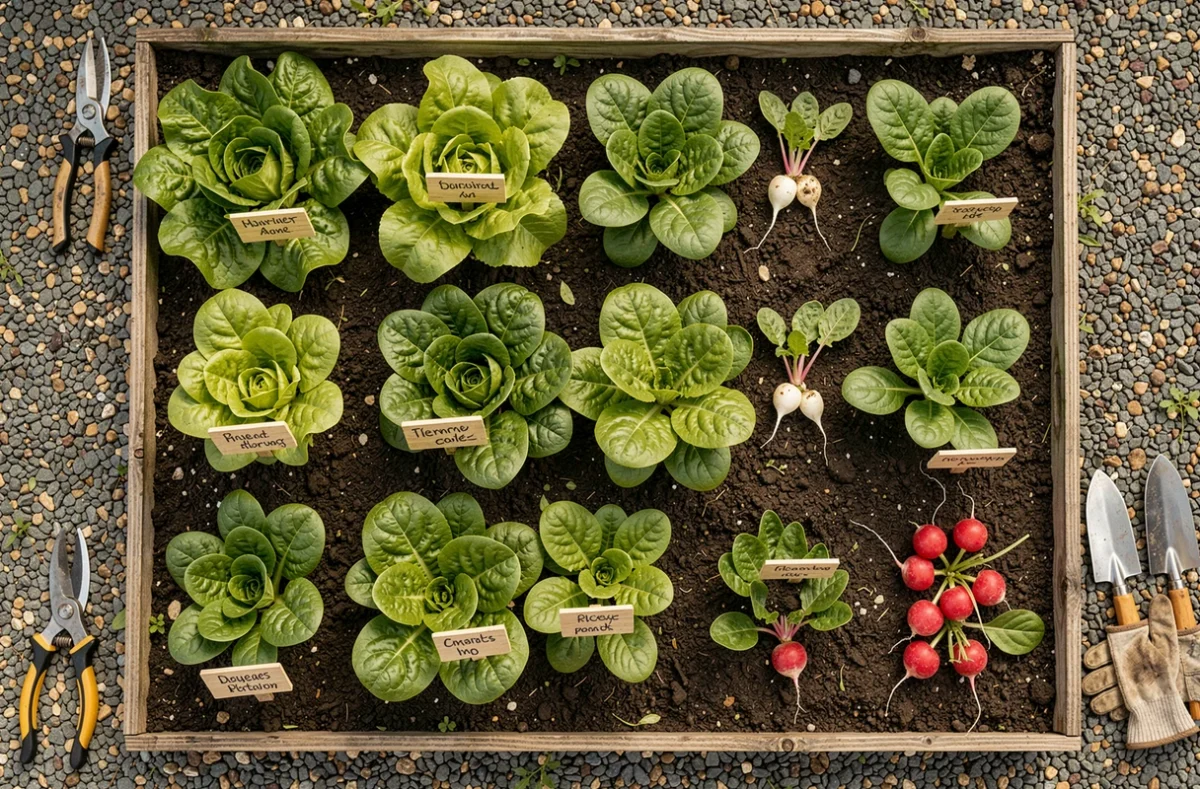
Why this choice of varieties over another? Because a beginner’s vegetable garden needs to yield quick results to remain motivating. Radishes, beans, cherry tomatoes, and zucchini tolerate small mistakes in timing or watering.
Radishes germinate in a few days and are harvested in three to four weeks. Dwarf beans require little space and naturally enrich the soil with nitrogen. Cherry tomatoes produce abundantly from mid-summer until the first cool days, provided you prune the suckers. Zucchini take up more space, but a single well-fed plant can provide regular harvests for several weeks.
Combine these crops with each other. Beans fix the nitrogen that tomatoes benefit from if you grow them nearby the following season. Crop rotation from year to year limits soil depletion and breaks the cycle of certain diseases. Note in a simple notebook where each vegetable family has grown to avoid replanting in the same spot two years in a row.
Indoor sowing: gaining several weeks on the season
Starting seeds indoors, near a bright window, allows you to plant already vigorous seedlings when outdoor temperatures permit. A small container, fine potting soil, and moderate watering are sufficient.
The main difficulty remains light. A seedling that lacks brightness grows tall and produces a weak stem. Place your containers in front of the best-exposed window and turn them a quarter turn each day to keep the growth straight. Harden off the seedlings gradually before taking them outside: a few hours outside each day for a week prevents thermal shock.
Tomatoes, peppers, and eggplants gain several weeks of growth thanks to indoor sowing started in late winter. For short-cycle vegetables like radishes or lettuce, direct sowing in the ground remains simpler and just as effective.
A successful vegetable garden is built season after season. The first mistakes, such as overwatering, sowing too early, or choosing a variety poorly suited to the local climate, are the most enduring lessons. Every harvest, even modest, refines your understanding of the soil and the rhythm of your crops.