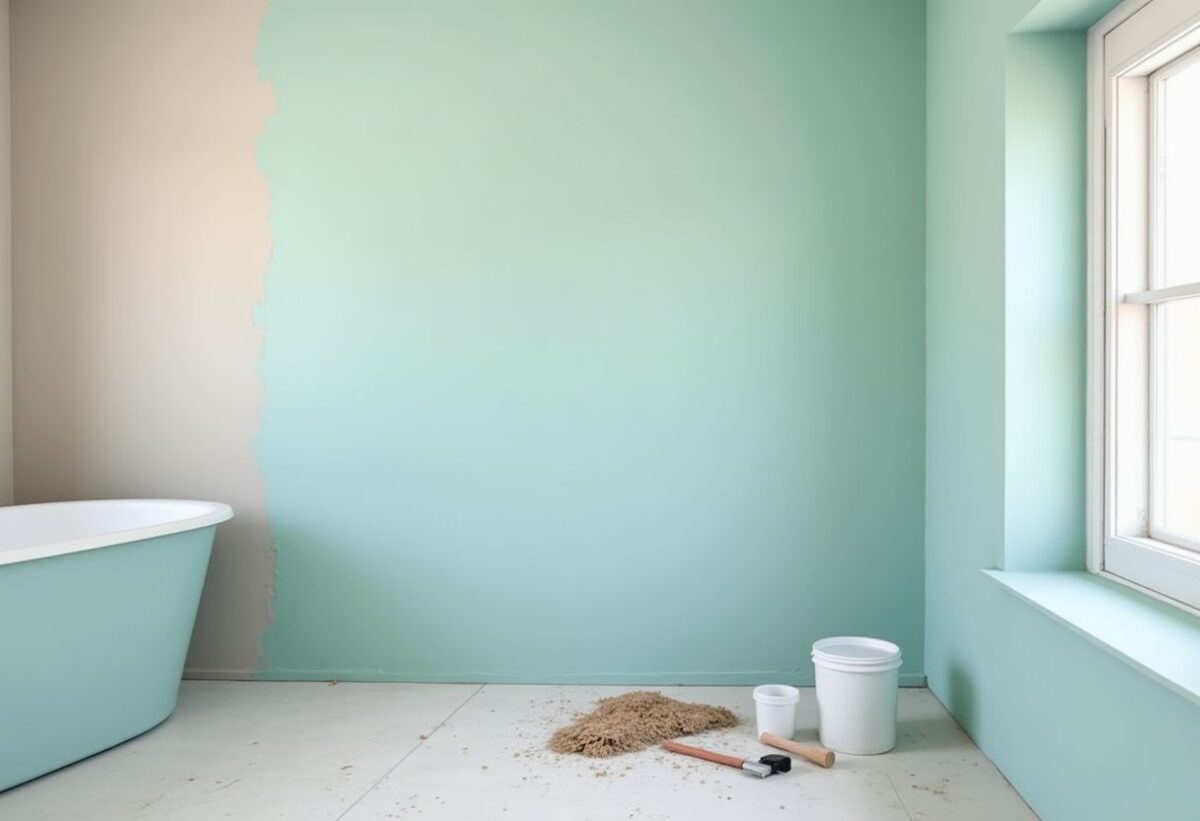
Renovating a bathroom often requires meticulous attention to detail, especially when it comes to repainting the walls. The challenges are numerous: humidity, potential mold, and already painted surfaces that require specific preparation. Finding the ideal paint that will adhere perfectly to an already coated wall may seem like a daunting task. However, with the right knowledge and tips, it is possible to ensure a finish that lasts and withstands the test of time. What criteria should be considered when choosing the right paint for this particular space, how can common mistakes be avoided, and what types of paints are best suited?
The stakes of humidity in the bathroom
Humidity is one of the main challenges when choosing paint for a bathroom. Its constant presence can affect the durability and appearance of the paint, which is why it is essential to understand how to deal with it.
The bathroom, due to showers and bathtubs, is a space where humidity reigns supreme. This constant humidity can cause the paint to peel, blister, or mold if an unsuitable paint is used. Acrylic paints, especially those designed specifically for humid environments, are an excellent option. They not only offer good adhesion on previously painted surfaces, but they also resist humidity, which extends the lifespan of your new coat of paint.
- Acrylic paints: moisture-resistant, they are perfect for bathrooms.
- Specific paints for humid environments: formulated to prevent mold growth.
Preparing the walls: an essential step
To ensure the best possible adhesion of the new coat of paint, meticulous wall preparation is essential. A poorly prepared wall can render even the best paint useless.
Before any application, it is necessary to clean the walls to remove any traces of dirt, grease, or mold. Applying bathroom paint often involves light sanding to create a slightly rough surface that will facilitate the adhesion of the new paint. It is also advisable to apply a special primer to ensure better grip.
Recommended types of paints for already painted walls
There are several types of paints on the market, but not all are suitable for use in a bathroom, especially on an already painted wall. Here is a selection of paints that stand out for their effectiveness.
- Epoxy paints: water and chemical resistant, ideal for highly exposed areas.
- Acrylic paints with anti-mold additives: they prevent the appearance of mold and keep the walls healthy.
- Satin or semi-gloss paints: their smooth finish prevents moisture from accumulating.
Tips for a successful application
Proper application of paint not only ensures a beautiful finish but also its durability. Even the best paint can fail if not applied correctly.
Sometimes, applying paint in a bathroom can pose unique problems, especially on already painted walls. To avoid brush marks and bubbles, it is advisable to use high-quality rollers for an even application. Applying the paint in thin layers helps reduce the risk of blistering. Corners and edges should be treated carefully with suitable brushes to ensure complete coverage.
Choosing the right paint for an already painted bathroom requires careful consideration of several factors. Humidity, prior surface preparation, and the type of paint are key elements that influence the success of the project. By following these recommendations, you can transform your bathroom into a pleasant space that is both functional and aesthetically pleasing while extending the durability of your renovation.