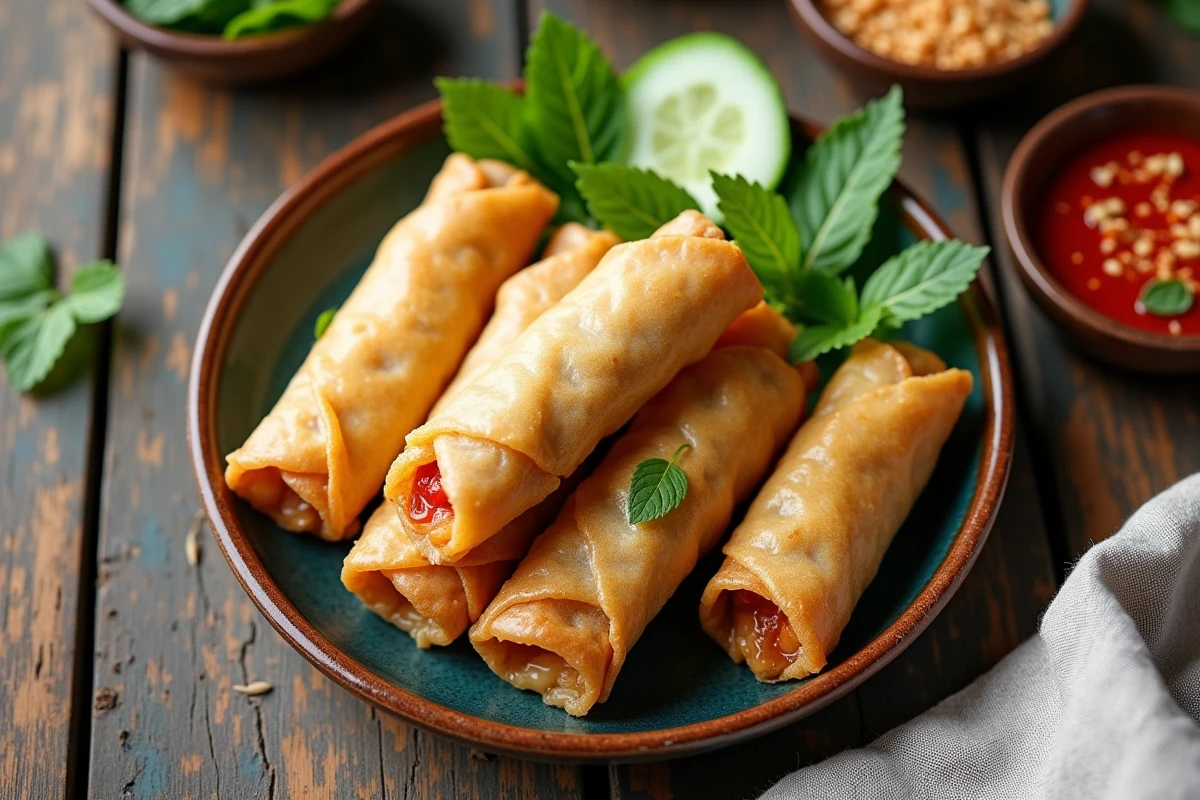
A crispy spring roll dipped in its sauce is a reflex for a quick meal or a shared appetizer. The question of eating spring rolls and health often arises when one seeks to better compose their plate. The answer depends less on the spring roll itself than on how it is prepared, the oil used, and what accompanies it.
Frying oil for spring rolls: the factor that no one considers
Have you ever noticed that two seemingly identical spring rolls can leave very different sensations in the mouth, one light, the other heavy and greasy? The difference often comes from the oil and its use.
Oil that is renewed with each homemade frying produces far fewer oxidized compounds than oil that is reused multiple times in fast food. These oxidized compounds promote inflammation and weigh on cardiovascular markers. A homemade spring roll fried in fresh oil therefore does not have the same health profile as a fast-food spring roll swimming in degraded oil.
The choice of oil radically changes the health impact of frying. Oils rich in stable monounsaturated fatty acids, such as high oleic rapeseed oil or oleic sunflower oil, generate fewer harmful compounds at high temperatures. They also limit the formation of acrylamide compared to traditional oils rich in polyunsaturated fatty acids, which are more sensitive to oxidation. To delve deeper into the link between eating spring rolls and health, the nature of the oil remains the first lever to consider.
Specifically, if you prepare your spring rolls at home, replacing standard sunflower oil with high oleic rapeseed oil reduces the load of oxidized fats without altering the taste or crispiness.
Nutritional composition of spring rolls: proteins, fibers, and lipids under the microscope
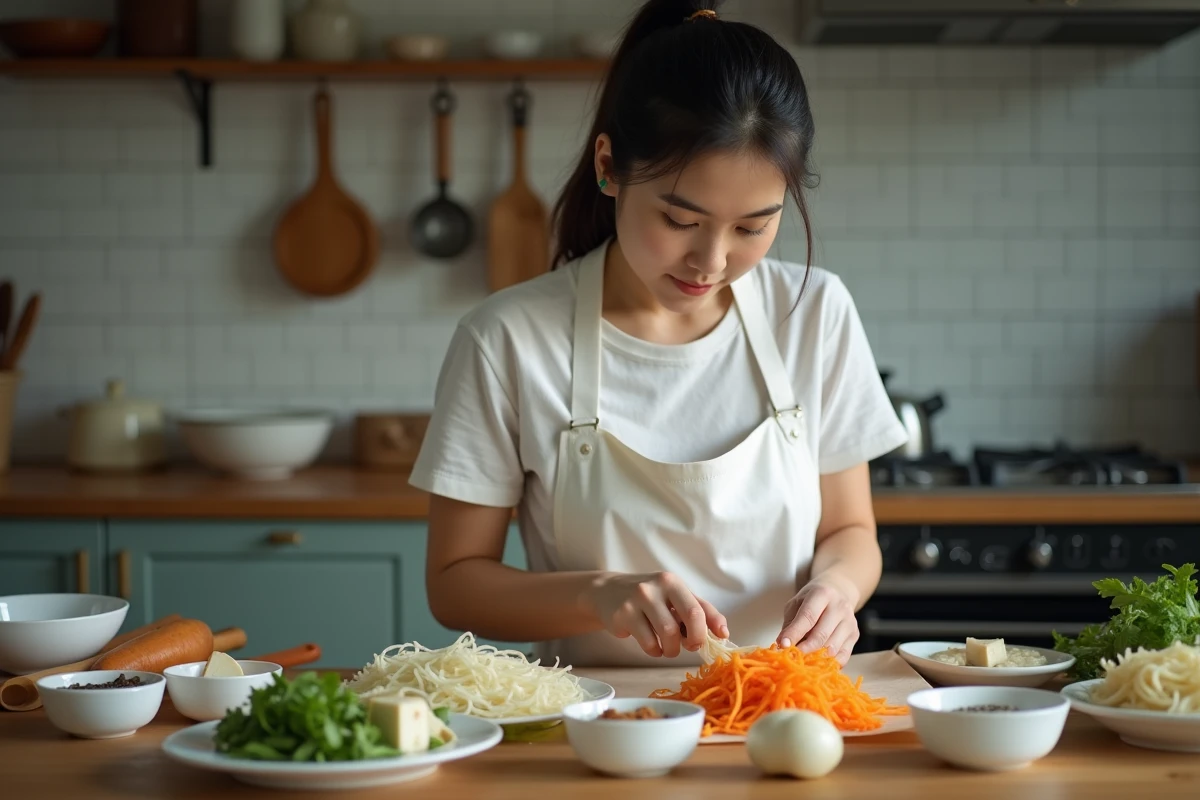
A classic spring roll combines a rice paper wrapper, vermicelli, grated vegetables (carrots, cabbage, black mushrooms), and a source of protein (pork, shrimp, chicken). This mixture offers a more varied nutritional intake than one might imagine.
What the filling really brings
- The grated vegetables and black mushrooms provide fiber and micronutrients rarely associated with a fried food. Even in small amounts, these fibers slow down the absorption of carbohydrates from the rice paper.
- The meat or shrimp constitutes a source of complete proteins, with an amino acid profile comparable to that of other meat-based preparations.
- The rice vermicelli provides most of the carbohydrates. Their glycemic index remains moderate when wrapped in the filling and fried rice paper, as the fats and proteins present slow down the rise in blood sugar.
The trap of lipids
Frying adds a significant amount of fat to the spring roll. A spring roll absorbs more oil the lower the temperature: insufficiently hot oil soaks the rice paper instead of searing it. Maintaining the right frying temperature helps limit the lipid intake without altering the recipe.
Sodium is another point of caution. The filling is often seasoned, and the nuoc-mâm sauce that accompanies the spring roll concentrates a notable amount of salt. Reducing the amount of sauce or diluting it with lime juice and water allows you to enjoy the dipping pleasure without exceeding sodium guidelines.
Industrial and ultra-processed spring rolls: read the label before choosing
The spring rolls sold in trays in the refrigerated or frozen section are not all equivalent. An increasing portion of this offering falls into the category of ultra-processed foods, with additives, flavor enhancers, and texturizers absent from the traditional recipe.
Why does this distinction matter? Recent research on nutrition shows that regular consumption of ultra-processed foods promotes weight gain and metabolic disorders, regardless of calorie count alone. An industrial spring roll with the same calorie count as a homemade spring roll can have a different metabolic effect due to its modified food matrix.
To spot a higher quality spring roll in stores:
- Check the ingredient list: the shorter it is, the closer the product is to a traditional recipe. A spring roll with a list exceeding ten ingredients likely contains unnecessary additives.
- Look for the type of frying oil indicated on the packaging. Rapeseed or oleic sunflower oil is preferable to palm oil or an unspecified blend of vegetable oils.
- Compare salt content between brands: the differences can sometimes be as much as double for a product that appears similar.
Meal balance with spring rolls: what happens on the plate around them
A spring roll alone does not define the quality of a meal. What accompanies it weighs just as much, if not more, in the overall nutritional balance.
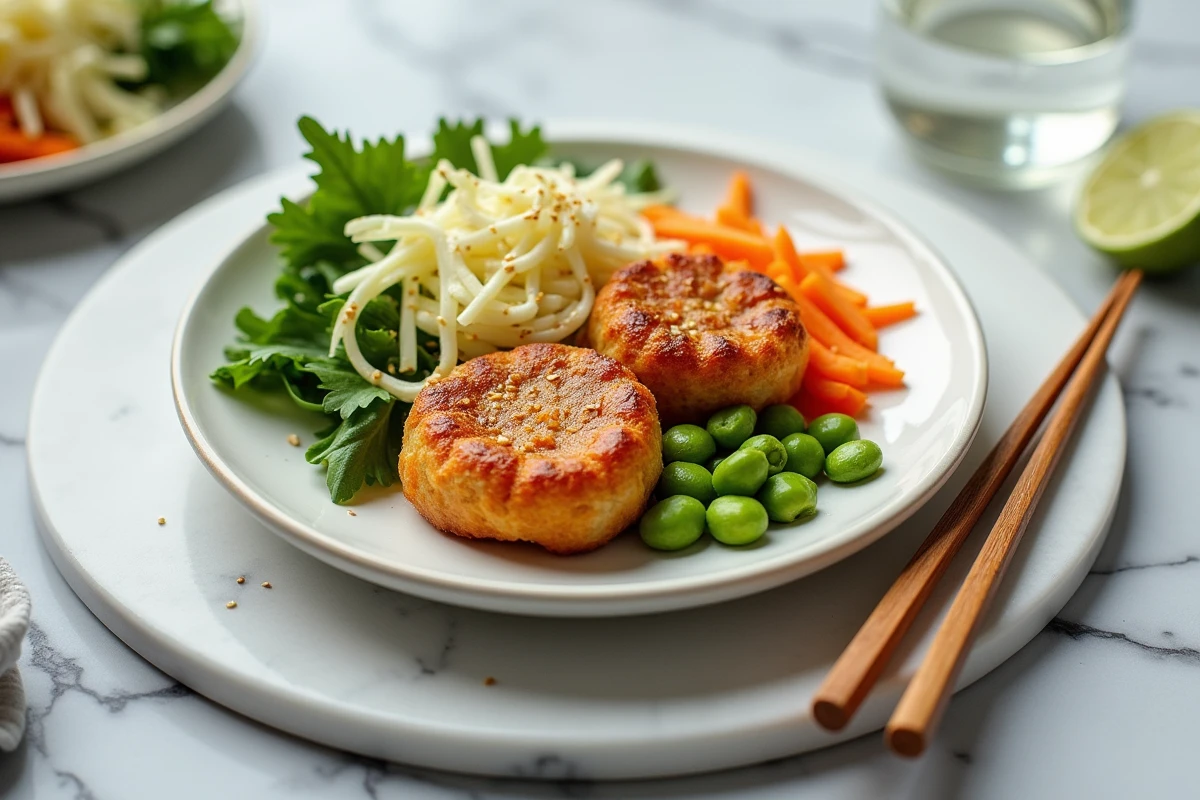
Pairing spring rolls with a generous portion of raw or cooked vegetables offsets their caloric density and increases the fiber intake of the meal. A salad of cucumber, mint, and carrot dressed with a drizzle of lime works well: it adds volume, freshness, and very few calories.
Limiting the number of spring rolls to two or three per person, integrating them as a component of the meal rather than as the main dish, allows you to enjoy their taste without disrupting lipid intake. Complementing with a bowl of plain rice and sautéed vegetables transforms a fried snack into a structured meal.
Frequency also matters. Consumed once or twice a week as part of a varied diet, homemade spring rolls fried in suitable oil do not pose any particular health issues. Imbalance appears when they become a daily choice, especially in their industrial version, accompanied by sauces high in salt and without vegetables on the side.
The spring roll is neither a health food nor a food to ban. Its place on the plate depends on the trio of oil-recipe-accompaniment. Homemade, fried in good renewed oil, served with fresh vegetables and a measured sauce, it remains a dish perfectly compatible with a balanced diet.