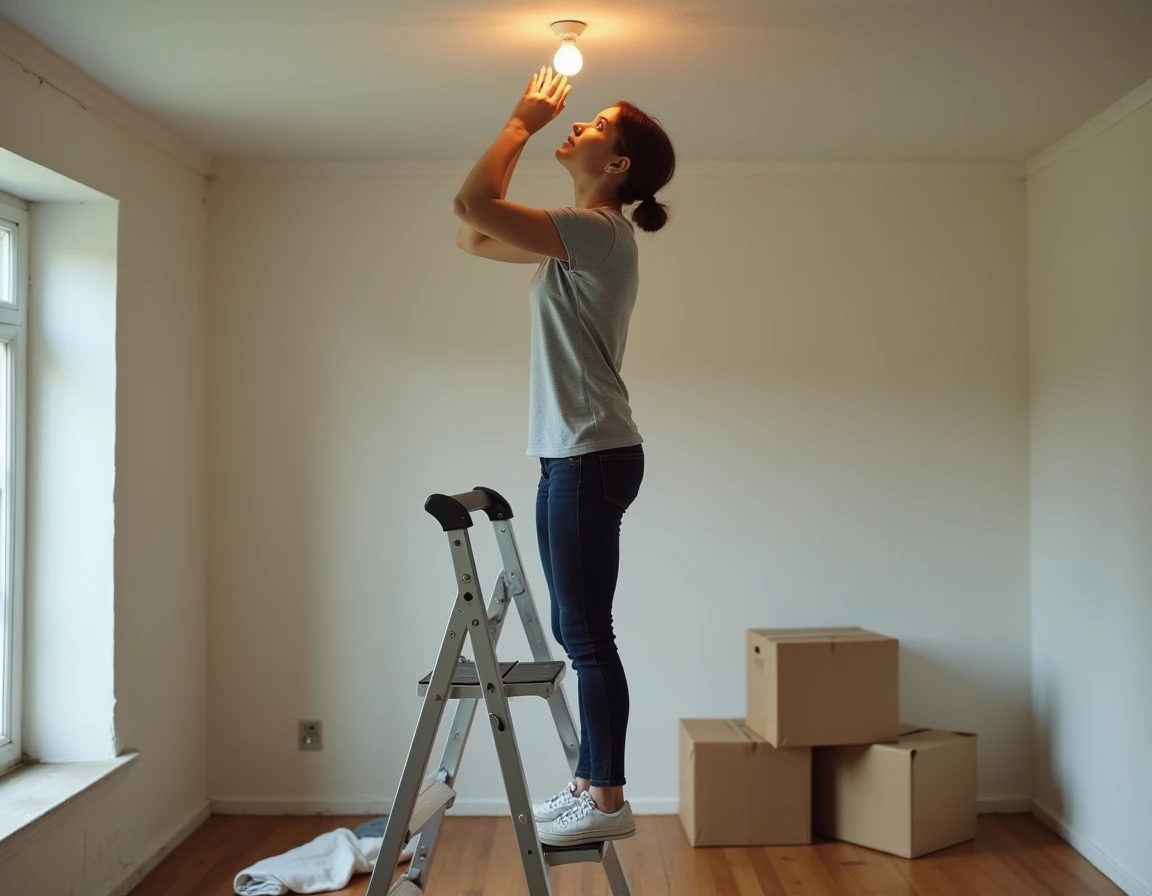
In French rental law, light bulbs are classified as consumables at the tenant’s expense, just like fuses or faucet seals. This classification changes everything at the time of departure: it determines what the tenant must leave, what they can take, and what may appear on the exit inventory.
Light Bulbs and Fixtures: A Legal Distinction to Know Before the Inventory
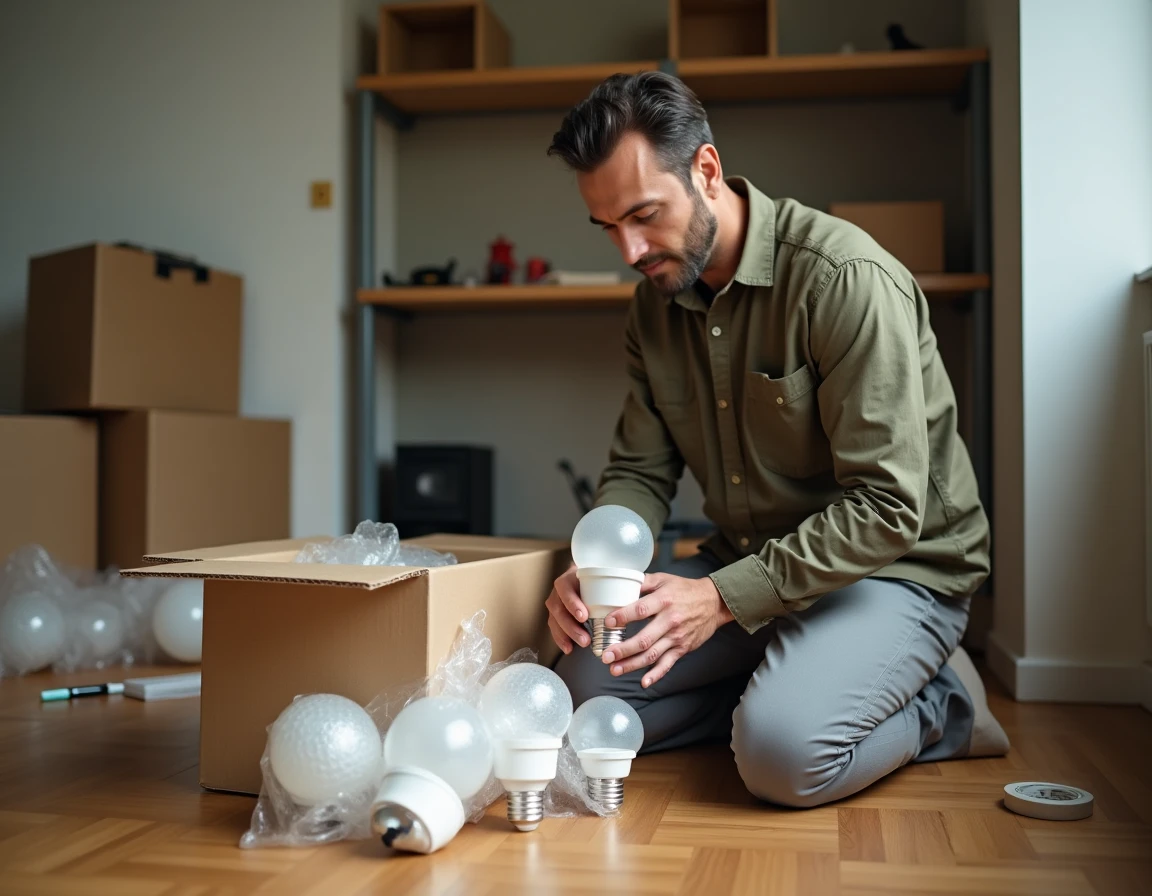
The most common confusion is about the difference between a light bulb and a fixture. A light bulb, regardless of its type (LED, halogen, compact fluorescent), is a consumable. It screws in, clips in, and is replaced. A fixture (wall sconce, ceiling light, recessed spot) is a fixed installation, often mentioned in the lease or in the entry inventory.
Decree No. 87-712 of August 26, 1987, updated by Decree No. 2016-382 of March 30, 2016, includes the replacement of light bulbs in the list of rental repairs. Specifically, the tenant must return sockets equipped with functional bulbs, unless the failure is due to the obsolescence of the electrical installation itself.
Fixtures follow a different logic. If they are listed in the lease or on the entry inventory, they must remain in place upon departure. If the tenant has installed a chandelier in place of a simple socket, the question of whether to keep or remove it depends on what existed at the entry. To know precisely whether to leave the bulbs during a move, 100 000 Watts offers a detailed guide that distinguishes each scenario.
The Role of the Exit Inventory for Light Bulbs and Sockets
The exit inventory is the document that makes the final decision. It compares the condition of the property room by room at entry and exit. Regarding lighting, the agent or owner checks two things: the number of functional light points and the presence of original equipment.
A burnt-out bulb noted during the exit can justify a deduction from the security deposit. The amount is usually small, but it adds up if several rooms are involved. The solution is simple: test each bulb the night before the appointment and replace those that no longer work.
What the Tenant Can Take Without Risk
- Freestanding lamps, floor lamps, and string lights that are not fixed to the wall or ceiling, as they fall under personal furniture
- Expensive connected or decorative bulbs, provided they are replaced with functional standard bulbs in each socket
- A fixture installed by the tenant themselves, if the original socket or ceiling light is restored to its initial state
The principle remains the same: return the property in the condition described at entry, normal wear and tear excepted.
Obsolescence of Light Bulbs: A Valid Argument in Case of Dispute
The lifespan of an LED bulb far exceeds that of a standard lease. For incandescent or halogen bulbs, the situation differs. If the tenant has occupied the property for several years, a burnt-out bulb may fall under normal wear and tear rather than a maintenance issue.
The obsolescence grid, increasingly attached to leases since the ALUR law, allows for calculating the residual share that falls to the tenant. After a certain duration of occupancy, obsolescence reduces or cancels the financial deduction related to a faulty bulb. This mechanism protects the tenant against disproportionate deductions from the security deposit.
In practice, a landlord who withholds several dozen euros for bulbs in a property occupied for a long time exposes themselves to a justified challenge before the departmental conciliation commission.
Real Estate Sale: Do Light Bulbs Stay in the Sold Property?
The context changes radically in the case of a sale. The sales agreement or the authentic deed signed at the notary may include a list of items left in the property: equipped kitchen, blinds, fixtures. In the absence of mention, the default rule applies: everything fixed to the structure is deemed sold with the property.
Light bulbs, screwed into sockets that are themselves connected to the electrical circuit, are part of the installation. A buyer who discovers a property without bulbs after signing will have a hard time seeking redress, as the damage is minimal. However, the removal of recessed fixtures or wall sconces not excluded from the sale can pose a real legal problem.
Checklist Before Leaving a Sold Property
- Review the list of items included in the sales agreement and verify that everything is still there
- Leave functional bulbs in each room, out of courtesy and to avoid any disputes during the key handover
- Only remove fixtures expressly excluded from the sale by written agreement between the seller and buyer
Whether the departure concerns a rental or a sale, the logic remains the same: light bulbs are inexpensive consumables, and leaving them in working condition avoids unnecessary friction. The real issue lies with fixed fixtures, whose status depends on the lease, the inventory, or the sales agreement. Checking these documents before moving day remains the most useful action.